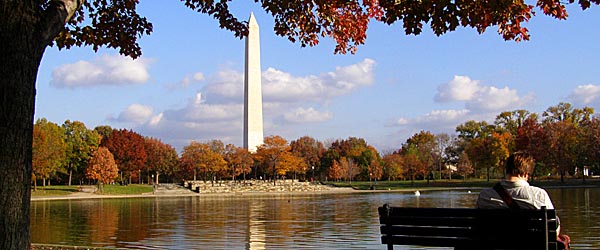
From the America portrayed in Melrose Place to The Wire there's a lot to explore in the United States. This is a country in which love for American nostalgia rubs shoulders with an obsession for a high-tech future, and an open-minded traveler to the country will come away with a new view on both U.S.A. and the rest of the world.
Most international visitors start off their American adventure with a visit to either coast, staying in major cities like New York City or Los Angeles.
But the real American character may be more easily found in the American heartland's waving fields of grain, the endless sky in Montana, or peaks of the Rocky Mountains. Or maybe it's found in the south, like the Florida Everglades wetlands or dusty New Mexico towns where time may as well have stood still for the last 40 years. Here's where you find America's self-image most alive and tourists can then view the more metropolitan cities with a better understanding of what it means to be American.
Armed with this understanding, the cities become easier to decipher, and destinations like trippy adult playground Las Vegas, cajun-flavored New Orleans, or latin-infused Miami can be devoured. The one constant in this country is that each place is like a small country with it's own culture. This also leads many Americans to 'discover themselves' at some point in their life, a romantic idea that is as old as the American Revolution, which stemmed from a country searching for itself. U.S.A. is a land of road trips, small towns, underground life in the cities, cowboys, and high-tech scientists and it has a place ready and willing to accept everyone.
The country is a wonderful place for a journey, and you could spend a lifetime exploring it. There are more types of geography here than in any other country, wildlife ranging from the lethal rattlesnake to pink flamingos, and as much character as you care to find.
United States of America travel articles
ESTA, or the Electronic System for Travel Authorization, is a requirement from the United States government for travelers using the Visa Waiver Program.
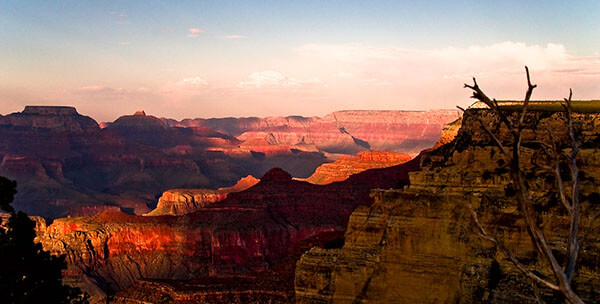
Getting that perfect photo of an impressive American natural landmark isn't always easy. Here are some tips to ensure you get the shot you want.
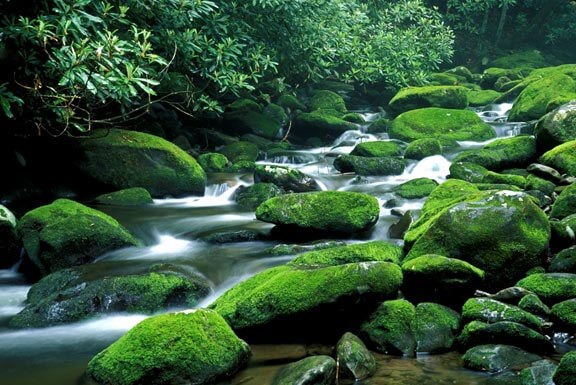
Great Smoky Mountains National Park is without a doubt one of the most beautiful places in the country. Spanning the mountains of both Tennessee and North Carolina, the park offers gorgeous scenery and abundant hiking.
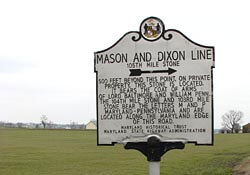
The Mason-Dixon Line is known by Americans as the separator of pro-slavery and pro-freedom states, between the South and the North. However, the line’s origin predates the United States and it has nothing to do with slavery.
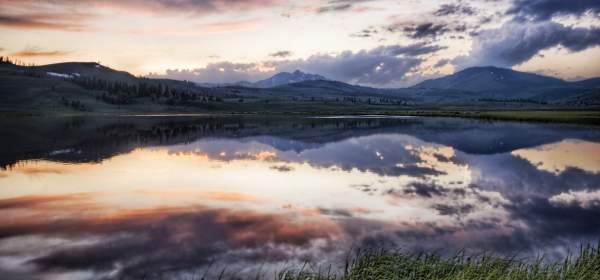
From 17 to 25 April, there's no admission charge to any of the 392 National Parks.

From today, you won't be allowed to pass immigrations in the United States without having an approved ESTA application on file.
Thanksgiving weekend is coming up this Thursday 26 November 2009 already. Thanksgiving is the busiest travel period in the United States and anyone on the road or in the air should be giving themselves lots of extra time, because everywhere is more packed than usual.
Google is powering up free WiFi in 47 American airports from now until 15 January 2010. The only 'drawback' is that search is locked into Google. A small 'price' to pay for getting online quickly and for free while traveling.
Travelers to the U.S. could soon have a fee levied on them when applying for Electronic System for Travel Authorisation (ESTA) clearance beginning at the end of 2009. This is per new rules that were approved last week by the government.
If you're looking for something to do on September 26, the Museum Day sponsored by Smithsonian magazine is a great, educational, and hopefully fun option. On the day, hundreds of U.S. museums and zoos all over the country will be opening for free general admission.
American Airlines, looking to bump up revenue in a recessionary environment, plans to raise checked-bag fees on U.S. domestic itineraries by $5.
If you're hunting for a cheap car rental deal this summer, but not having any luck, you can also see what the Automobile Association of America (AAA) has available.
Secure Flight, an airline security program being implemented by the Transportation Security Administration (TSA), aims to enhance watch list matching after a recommendation from the 9/11 Commission.
JetAmerica officially will not get off the ground in August. Or, it seems, at all. The airline announced in a press release this afternoon that it is suspending sales to all markets and that it would immediately begin to notify affected customers and process refunds to all customers who have booked on the public charter flights.
JetAmerica is the budget airline that doesn't seem to take to the air. Based in Clearwater, FL, the airline aims to serve mid-sized U.S. cities that the legacy carriers aren't providing a comprehensive flight schedule for.
Electronic System of Travel Authorization, or ESTA, has now processed 8 million applications for visa free travel to USA under the Visa Waiver Program (VWP) that 35 countries participate in.
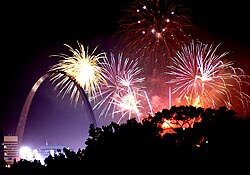
With President Obama in the Oval Office and the previously very frosty foreign relations, and America's standing in the world, thawing up, it's time to celebrate for real this 4th of July!
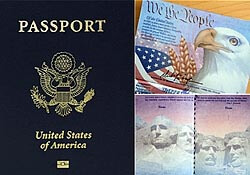
American and Canadian citizens will need to follow new documentation requirements to come into the US or Canada from abroad.
The TSA doesn't just throw out the items confiscated at security checkpoints. These items are usually sold back to consumers at state auctions.
On June 1, 2009, everyone crossing the US border will need a passport, including American citizens.
Nationals of Visa Waiver Program countries will still be eligible to travel without a visa but will have to obtain USA pre clearance for their trip.
Some tips from Philadelphia's Travelers Aid organization on how to get from Philly to New York on a budget.
If you've booked your flights or are still planning to travel this Thanksgiving Weekend, here's some information to help you stay in the know and on time when you go
The "Green Lanes" currently available at only a number of domestic US airports will be rolled out nationwide. This will help families traveling this holiday season to have a little less stress
Mayors in US cities are applauding the recent expansion of the Visa Waiver Program, which makes it easier for many asian travelers to visit the USA.
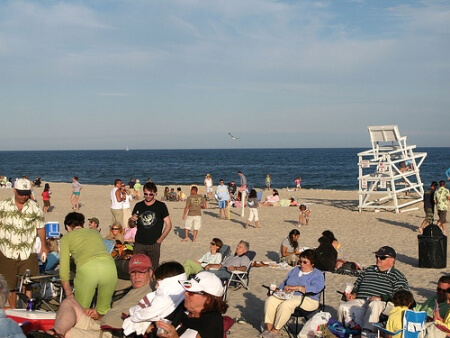
These picks by Dr. Beach promise to be the best beach destinations this year.

The DHS, charged with protecting America from terror, is proposing a massive several billion dollar program to fingerprint every foreign visitor to the United States on their departure from our country.

Anyone who's traveled to the U.S. since 2004 knows that immigrations has collected the index-finger prints of all foreigners. Now, just to make sure you feel like a criminal suspect, they'll go ahead and take prints of all 10 fingers!
Practical information about United States of America
Food and drink
While you can find any cuisine you desire in the United States, there are some culinary highlights that are well worth mentioning.
In America's Southwest, the fusion between Mexican and American food has created Tex-Mex, hearty and spicy food full of sweetcorn, tortillas, barbecued meats, and traditional herbs such as cilantro.
In California, the trend has for a long time been a style called California fusion. This is a mix between cuisines from around the world, but centered on fresh and healthy ingredients. In this regard, it is somewhat similar to Modern European in that it often uses locally grown foods and takes its inspiration from traditional dishes.
Pizza. While this dish was born in Italy, it came of age in New York City and Chicago. The two cities created pizza pies as distinctive as themselves, with New York opting for a thin crust, which is quite crisp, and Chicago came up with a double-crust pizza with two layers of filling! There's no question that the NYC version is healthier, but both types have fervent devotees, making pizza a sensitive subject for inhabitants of these cities.
Southern cooking is flavorful and notoriously unhealthy, with corn dogs, chicken-fried steak, barbecue beans, and green beans a staple. You can eat this way, and keep your figure, just not for very long!
Luisiana, with its history of mixing French and Caribbean influences, has its Creole foods. These include delicious stews like jambalaya, gumbo, and of course the po' boy sandwiches.
Etiquette in USA
Americans are renowned for their openness and friendliness to visitors. The wide variety of national origins and the USA's relatively short history has resulted in numerous cultural and traditional customs living alongside each other. In large cities, people of the same ethnic background often live within defined communities.
Shaking hands is the usual form of greeting. A relaxed and informal atmosphere is usually the norm. As long as the fundamental rules of courtesy are observed, there need be no fear of offending anyone of any background. Gifts are appreciated if one is invited to a private home. As a rule, dress is casual. High-end restaurants, hotels and clubs may require more formal attire.
Smoking is increasingly unpopular in the US; it is essential to ask permission before lighting up. Smoking is not allowed on city transport and restricted or forbidden in public buildings in most states. There will be a posted notice where no smoking is requested. An increasing number of states (including California and New York) have banned smoking altogether in bars, restaurants and many public places.
Dining etiquette
- Never arrive early to a dinner party
- If you are offered a second helping of food, feel free to take as much as you want. Americans like people to eat well.
General etiquette
- "See you later," is just a farewell expression; it doesn't mean anything. Same with "How are you?" ("Fine!" "Great!" "Doing well" are the only appropriate responses.)
- Smile. Americans like to smile and be smiled at.
- Try to avoid silence; it makes Americans uncomfortable.
Tipping in U.S.A.
Tipping in America is a confusing subject for foreigners, as it seems that everyone has their hand out for a dollar bill or two... or more.
Here are some simple rules of thumb:
- Tip your waiter or waitress 15% for service as expected, more for better service. Your tips are part of their wages, and they rely on them to eat themselves.
- Tip porters, cab drivers, etc a couple of dollars. More if it's a really upscale place.
Money and costs
The only common currency used is the U.S. dollar (USD), though some merchants near the Canadian border will take Canadian dollars. The US dollar is divided into 100 cents (¢). Coins come in denominations of 1¢ (penny), 5¢ (nickel), 10¢ (dime), 25¢ (quarter), the seldom-seen 50¢ (half-dollar) and the $1 coin. Bills come in $1, $2 (rare), $5, $10, $20, $50 and $100 denominations.
ATMs (cash machines) are available all day and night at banks, shopping centers, grocery stores, casinos, and airports. Normally, it will cost $1 to $3 to withdraw cash unless your home back is affiliated with the bank operating the ATM. The exchange rates using ATMs are as good as you'll get anywhere.
Credit cards are used everywhere. Often, you'll actually have to have one, for example when renting a car or booking flights. Bring at least one card with you when visiting the country. Keep a copy of your card separate from the card, so you can report the card stolen should it happen. Then call your credit card company right away:
American Express, 1-800-528-4800, www.americanexpress.com
Diners Club, 1-800-234-6377, www.dinersclub.com
Discover, 1-800-347-2683, www.discovercard.com
MasterCard, 1-800-622-7747, www.mastercard.com
Visa, 1-800-847-2911, www.visa.com
Sales tax varies by state and county, check out state sales taxes at Sales Tax Clearinghouse. Hotel taxes vary by city.
Costs
It's very easy to overspend on an American vacation, no matter what your original budget is. The way you travel and your destination is a deciding factor, as U.S. cities can strip your wallet in hours. You'll have to go to extremes to have a budget of less than $100 per day and most visitors should count on spending about $175 to $250 per day. That will cover you for a rental car, gas, food, a decent hotel, and some sights. Going over $300 is simple, just splash out a bit or stay in one of the major cities.
Hotels will cost from $80 for a midrange room. In some cities, count on spending $200 just to get a clean room (New York, we're looking at you), but in the rural areas $100 will get you a great room. Watch out for some motel's 'bargain' offers, $39 will be for single occupancy only and won't include taxes.
Camping or hostels are about $15 to $25 per night, and combined with self catering and travel by bus it's your best option for a real budget trip.
Car rental starts around $40 per day and if you're roadtripping, gas will be another $20 to $40 each day.
Tipping is standard practice across America and in city restaurants, 15% of the bill is expected. A bit less is fine if it's a very casual place, but higher end venues will expect at least 20%. Bartenders expect $1 per drink. Taxi drivers and hairdressers expect 10% to 15%. Skycaps at airports and porters at posh hotels expect $1 a bag or so. It’s polite to leave a few dollars for the hotel maid, especially if you spend several nights.
Visas
Valid passport required by all nationals referred to in the chart above; validity varies - for most countries the passport must be valid for at least six months from the date on which the holder enters the USA. If not, the holder will be admitted until the expiration date on the passport; check with the embassy.
Visas are required by all visitors except citizens of countries taking part in the Visa Waiver Program (also known as ESTA). A visa costs $160 as of 2018. All travelers should apply at their local U.S. Embassy or Consulate. Visas can take a long time to be issued, so planning well in advance is highly recommended.
ESTA,The Electronic System for Travel Authorization (ESTA) came into force on 12 January 2009. It is a fully automated, electronic system for screening passengers before they begin travel to the United States under the Visa Waiver Program. ESTA applications must be submitted at least 72 hours before travel to the USA. Some websites may charge you for the service but you can apply online for free at www.dhs.gov. The granting of an ESTA does not guarantee entry to the USA.
In-depth explanation how ESTA works.
While travelers with HIV used to have a really hard time getting U.S. visas, the restrictions have been eased since January 2010. A decision still has to be made by a consular officer, but this is now at the discretion of the officer carrying our the visa interview, not the Center for Disease Control (CDC), which speeds things up.
Health and safety
Make sure that your travel insurance is current, as health care in the United States is both excellent and terribly expensive. Also make sure that you have a note of your insurance provider's phone number to call in the U.S. should you need to visit a hospital.
America is mostly safe for visitors, and your greatest risk is petty crime and car accidents. And like anywhere, bring your wits with you, and lock away your valuables in the hotel safe.
Emergency phone numbers
For most emergencies you'll come across as a visitor, call 911 as soon as you can and request the necessary services such as the police or fire department.
Facts and map
U.S.A. basics
Government
Federal Republic since 1789. Gained independence from the U.K. in 1776. The USA has 50 States and the District of Columbia (as in ‘Washington, DC'), which lies between Maryland and Virginia. President Barack Obama since 2009.
Language
English, with significant Spanish-speaking minorities (10.7%).
Religion
Protestant majority (52%) with Roman Catholic, Mormon, Jewish and many ethnic minorities.
Electricity
110 volts AC, 60Hz. Plugs are of the flat two-pin type. European electrical appliances not fitted with dual-voltage capabilities will require a plug adaptor, which is best purchased before arrival in the USA.
Time
The USA is divided into six time zones. Daylight Savings Time (DST) is between the second Sunday in March to first Sunday in November. Hawaii does not observe summertime hours:
Eastern Standard Time: GMT - 5 (GMT - 4 DST).
Central Standard Time: GMT - 6 (GMT - 5 DST).
Mountain Standard Time: GMT - 7 (GMT - 6 DST. Arizona does not observe DST).
Pacific Standard Time: GMT - 8 (GMT - 7 DST).
Alaska: GMT - 9 (GMT - 8 DST).
Hawaii: GMT - 10.
Area
9,826,630 sq km (3,794,083 sq miles). About half the size of Russia; about three-tenths the size of Africa; about half the size of South America (or slightly larger than Brazil); slightly larger than China; more than twice the size of the European Union.
Shared borders
Canada and Mexico.
Population
301 million (official estimate 2007). Population density is 32.5 per sq km.
Capital
Washington, D.C. Population: 581,530 (2006).
Over 25 other cities have a population larger than that of Washington, DC. New York is the largest city, with a population of 8.3 million (2006). Chicago, Dallas, Houston, Los Angeles, Philadelphia, Phoenix, San Antonio and San Diego had populations ranging from 1.2 - 3.8 million in 2005.
Map and geography
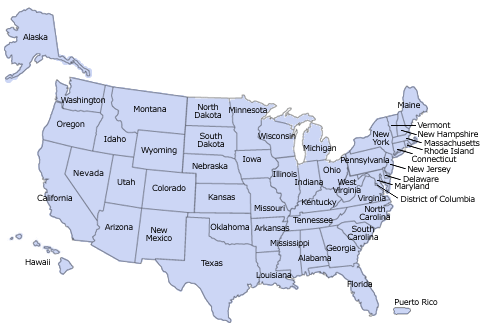
Geography
Covering a large part of the North American continent, the USA shares borders with Canada to the north and Mexico to the south and has coasts on the Atlantic, Pacific and Arctic oceans, the Caribbean Sea and the Gulf of Mexico. The State of Alaska, in the northwest corner of the continent, is separated from the rest of the USA by Canada, and Hawaii lies in the central Pacific Ocean. The third-largest country in the world (after the Russian Federation and Canada), the USA has an enormous diversity of geographical features. The climate ranges from subtropical to Arctic, with a corresponding breadth of flora and fauna. For a more detailed description of each region's geographical characteristics, see the individual state sections.
Business hours
In most places, businesses keep hours from 9am to 5pm Monday to Friday. Bank hours are open 8:30am to 4:30pm Monday to Thursday, until 5:30pm Friday. There are some major bank branches and post offices that are open from 9am to noon or 1pm on Saturdays.
Stores are open 10am to 6pm Monday to Saturday, noon to 5pm Sunday. In malls and downtown shopping areas, hours may be extended to 8pm or even 10pm. Grocery stores and supermarkets are normally open from 8am to 8pm, and in any city of there will be a number of 24 hour supermarkets. Note that in some parts of the country, all businesses except a few restaurants may close on Sunday.
Restaurant hours vary so widely that they are impossible to generalize; they can fluctuate with seasonal demand and owner whim. High season restaurant hours are usually longer, at times significantly, than low season. In low season especially, it can be a good idea to call ahead or ask around before making a trip or plans.
Bars and pubs are usually open from 5pm to midnight daily, extending to 2am on Friday and Saturday. Nightclubs and dance clubs generally open at 9pm and close at 2am Wednesday to Saturday. ours may be longer in larger cities.
Getting there and around
Getting there
Main entry points
Airports
There are more than 400 domestic U.S. airports, and about a dozen are major international hubs. Many others have limited international flights, mostly to Canada, Mexico, and the Caribbean.
- Atlanta Hartsfield-Jackson International (ATL, www.atlanta-airport.com)
- Boston Logan International (BOS, www.massport.com/logan)
- Chicago O’Hare International (ORD, www.flychicago.com)
- Dallas-Fort Worth (DFW, www.dfwairport.com)
- Honolulu (HNL, www.honoluluairport.com)
- Houston George Bush Intercontinental (IAH, www.worldairportguides.com/houston-iah)
- Los Angeles (LAX, www.lawa.org/lax)
- Miami (MIA, www.miami-airport.com)
- New York John F Kennedy (JFK, www.panynj.gov)
- Newark Liberty International (EWR, www.panynj.gov)
- San Francisco (SFO, www.flysfo.com)
- Seattle Seattle-Tacoma International (SEA, www.portseattle.org/seatac)
- Washington, DC Dulles International (IAD, www.metwashairports.com/dulles)
Land crossings
The USA shares far ranging land borders with Canada in the north and Mexico in the south. It is relatively easy crossing from the USA into either country, it’s returning to the USA that can be problematic if you haven’t brought all your documents. The US Customs & Border Protection Agency tracks current wait times at every border crossing. Some borders are open 24 hours, but most are not.
The USA has more than 20 official border crossings with Canada. Busy entry points include those at Detroit (MI) / Windsor, Buffalo (NY) / Fort Erie, Niagara Falls (NY) and Blaine (WA) / British Columbia. The downside to choosing a quiet border crossing is that officers have plenty of time to take apart your luggage.
The USA has more than 30 official entry points with Mexico. The main ones are San Diego / Tijuana, Nogales, El Paso / Ciudad Juárez and Brownsville / Matamoros. As always, have your papers in order, act polite and don’t make jokes or casual conversation – many border officers take a dim view on jokesters.
Bus travel into the U.S. is possible from both Canada and Mexico with Greyhound. Sometimes you'll need to change buses at the borders.
Cars and motorcycles can be driven across the borders. Rember to have your vehicle registration papers, insurance papers, and your driver's license. Canadian car insurance is valid in the U.S.A. Driving from the U.S. into Mexico means you'll need supplementary insurance for Mexico, and U.S. car rental companies won't normally let you take the car across the border.
Trains cross the border to Canada, operated by Amtrak and VIA Rail. Customs inspections happen at the actual border, not when boarding the train. There are no train services crossing the U.S. / Mexico border.
By sea
You can travel to and from the USA on a freighter, though it will be much slower and less cushy than a cruise ship. Nevertheless, freighters aren’t spartan (some advertise cruise-ship-level amenities), and they are much cheaper (sometimes by half). Trips range from a week to two months, and stops at interim ports are usually quick. Excellent sources of information are the Freighter World Cruises and Cruise & Freighter Travel Association.
Immigration and customs clearance
Getting through immigration control can take as long as 2 hours on some days, especially on summer weekends. People traveling by air from Canada, Bermuda, and certain countries in the Caribbean can sometimes clear Customs and Immigration at the point of departure, which is much quicker.
All travelers to America need to comply with the Secure Flight rules. Also, a number of countries participate in the visa waiver program for travelers, and those travelers need to apply for their ESTA clearance. Both of these procedures need to be finished at least 72 hours before traveling.
Prepare to be fingerprinted
As of January 2004, many international visitors traveling on visas to the United States will be photographed and fingerprinted at Customs in a new program created by the Department of Homeland Security called US-VISIT. Non-U.S. citizens arriving at airports and on cruise ships must undergo an instant background check as part of the government's ongoing efforts to deter terrorism by verifying the identity of incoming and outgoing visitors. Exempt from the extra scrutiny are visitors entering by land or those from the 28 countries (mostly in Europe) that don't require a visa for short-term visits. For more information, go to the Homeland Security website.
Customs limits for goods
Every visitor more than 21 years of age may bring in, free of duty, the following:
- 1 liter of wine or hard liquor
- 200 cigarettes, 100 cigars (but not from Cuba), or 3 pounds of smoking tobacco
- $100 worth of gifts
These exemptions are offered to travelers who spend at least 72 hours in the United States and who have not claimed them within the preceding 6 months. It is altogether forbidden to bring into the country foodstuffs (particularly fruit, cooked meats, and canned goods) and plants (vegetables, seeds, tropical plants, and the like).
Foreign tourists may bring in or take out up to $10,000 in U.S. or foreign currency with no formalities; larger sums must be declared to U.S. Customs on entering or leaving, which includes filing form CM 4790. For more specific information regarding U.S. Customs and Border Protection, contact your nearest U.S. embassy or consulate, or the U.S. Customs office (phone +1-202-927-1770).
Getting around
By Plane
For long-distance trips, the most efficient way to get around the United States is by plane, even in these days of increased security and poor airline service.
By Train
Long-distance trains in the United States are operated by Amtrak. Be aware, however, that with a few notable exceptions (for instance, the Northeast Corridor line between Boston and Washington, D.C.), intercity service is not particularly fabulous. Delays are common, routes are limited and often infrequently served, and fares are seldom much lower than discount airfares. That said, if time isn't an issue, train travel can be a very scenic method of traveling the country. If you choose to travel by train, do it for the experience, not for the convenience.
There are discount rail passes sold to U.S. residents who want to see the country by rail though you'll need quite a bit of time on your hands to make the pass worth your while. Rail travelers can buy a North America Rail Pass, good for up to 30 days of unlimited travel in economy class on Amtrak in the U.S. and Canada, except on the Acela Express trains and the Auto Train that run on the East Coast. Note that you must travel at least one segment of your journey in Canada. Meals and sleeping accommodations are extra. Reservations are generally required and should be made for each part of your trip as early as possible.
Amtrak also offers rail/fly packages that allow travelers to fly to their destination in one direction and to take the train in another.
By Bus
Bus travel is often the most economical form of public transit for short hops between U.S. cities, but it can also be slow and uncomfortable - certainly not an option for everyone (particularly when Amtrak, which is far more luxurious, offers similar rates). Greyhound/Trailways, the sole nationwide bus line, offers several pass and discount options geared to domestic travelers.
By Car
Usually, the most cost-effective, convenient, and comfortable way to travel around the United States is by car. Many highlights of the country just can't be seen any other way.
The interstate highway system connects cities and towns all over the country; in addition to these high-speed, limited-access roadways, there's an extensive network of federal, state, and local highways and roads.
If you plan on driving your own car over a long distance, then automobile-association membership is recommended. AAA, the American Automobile Association (phone +1-800-222-4357), is the country's largest auto club and supplies its members with maps, insurance, and most important, emergency road service. The cost of joining is $58 for a single member.
States in United States of America
 | |
Weather in United States of America
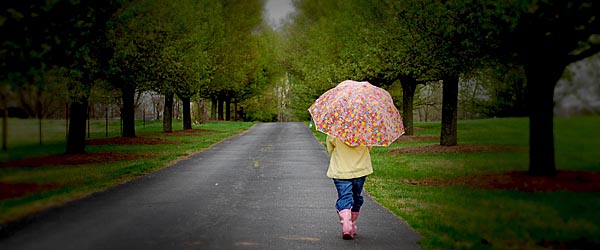
The climate is mostly temperate, but with some notable exceptions: Hawaii and Southern Florida have a tropical climate, while Alaska has Arctic tundra. The Great Plains in the Mid West dry, flat and grassy, turning into arid desert in the far West and Mediterranean along the California coast.
In winter time, the northern and mid-western major cities can see heavy snow fall, as much as 2 feet (61 cm) can fall in a single day and temperatures can plummet.. Summers are humid, but mild. Temperatures regularly reach over 100°F (38°C) during the Midwest and Great Plains summer. Some areas in the northern plains can experience cold temperatures of -30°F (-34°C) in winter. Temperatures below 0°F (-18°C) sometimes reach as far south as Oklahoma.
Southern climate is also variable. In summer, it is hot and humid, but from October through April the weather can range from 60°F (15°C) to cold snaps of around 20°F (-7°C).
The Great Plains and Midwestern states also have a tornado season ranging from late spring to early fall, earlier in the south and later in the north. States along the Atlantic coast and the Gulf of Mexico risk hurricanes between June and November. These intense and dangerous storms frequently miss the the U.S. mainland, but evacuations are often ordered and should be heeded.
The Rocky Mountains are cold and snowy in winter and some parts of the Rockies see more than 500 inches (1.2 m) of snow in a season. Even during the summer, temperatures are cool in the mountains, and snow can fall nearly year-round.
The Southwest's desert climate is hot and dry during the summer, with temperatures often exceeding 100°F (38°C). Thunderstorms are very frequent from July through September. Winters are mild, and snow is unusual. Average annual rainfall is low, usually less than 10 inches (25 cm).
Cool and damp weather is common in the Northwest (the states of Washington and Oregon mainly). Rain is most frequent in winter, although snow is rare, especially along the coast. Extreme temperatures and weather are uncommon. Rain falls almost exclusively from late fall through early spring along the coast.
Northeast cities are known for summers with temperatures reaching into the 90s or more, with extremely high humidity, usually 80%. This can be a drastic change from the Southwest. High humidity means that the temperature can feel up to 20 degrees hotter than actual readings. The Northeast also gets plenty of rain and snow.
Best time to visit United States of America
The sheer size of the United States makes the country a year round destination. One part or another always has fantastic weather, though conversely, another is guaranteed to be awful. The trick is to know your destination and season.
Most visitors come to America in the summer months, which here is defined as starting on Memorial day (last Monday in May) and finishes up on Labor Day (first Monday of September). This is also the time most Americans vacation, as schools are out, rather than the weather being the best. In fact, quite often the destination you're interested in will have a much nicer climate in Spring or early Autumn.
Spring
Spring, during March to May, is an ideal time to visit the major cities like San Francisco, Los Angeles, Miami, New York, or Chicago. Later on, the heat is oppressive and humidity can hit 100%! Florida is also extremely pleasant during this time, especially in the Gulf of Mexico part, where you can swim in the warm waters. The same goes for the Texas coast line and South Padre island.
Summer
Summer months are burning hot in the desert states of New Mexico and Arizona, and the Midwest is so humid that walking outside feels like a sauna. However, it's the perfect time to visit the Pacific Northwest as there is little rain. The mountain states, Colorado, Wyoming, Montana, and the high elevations parts of Arizona and Utah are great during the summer time. Temperatures are moderate, there is plenty of sunshine, and the rain stays away.
Fall
September to November is the normal fall season in the United States, and again the major cities are pleasant destinations. For beautiful foliage, visit the New England states of Maine, New Hampshire, Vermont, Massachusetts, Rhode Island, and Connecticut. This is also a good time to visit much of the Midwest, as the harvests are in full swing, there are food markets everywhere, and the weather stayps pleasant most of the time.
Winter
Ski season kicks off in November through March for much of the mountain states of Colorado, Utah, Wyoming, and Montana and it can be quite expensive. Aspen in Colorado has some of the world's best skiing, but also at some highly elevated prices to go with the high altitude slopes. Somewhat cheaper choices can be Steamboat and Jackson Hole. Winter is also expensive in Florida due to migrating 'snowbirds' and is high season for Hawaii.
Festivals
There are literally far too many to mention. Make sure to plan around festivals and big conventions though, as hotel room rates shoot up and restaurants get packed to capacity in many locations. Las Vegas especially can be affected, as is Austin at anytime that SXSW, or South by Southwest, takes place. For more about festivals, look at the guides for each state and city in America.
Hero image is by rogersmith on flickr